Mixed Media Art
History and Evolution Mixed media art, the practice of combining different materials and mediums into a single work, challenged traditional boundaries in the early 20th century. While artists have historically experimented with various tools, the movement gained formal recognition through the Cubist collages of Pablo Picasso and Georges Braque. By incorporating “non-art” elements like newspaper clippings, sand, and wood into their canvases, they redefined what a painting could be. This evolved through the Dada and Surrealist movements into contemporary practices where technology and physical objects merge.
Regional Presence and Technique This art form is globally pervasive, flourishing in creative hubs where traditional craft meets industrial innovation. In modern studios, such as those in India, artists blend folk traditions with digital fabrication. The technique relies on the layering of diverse components—acrylics, textiles, found objects, and laser-cut elements—to create a tactile, multidimensional experience.
Modern Applications Today, mixed media is a primary vehicle for storytelling:
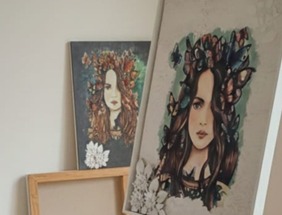
- 3D Portraits: As seen in your recent images, artists layer laser-cut wood or paper butterflies onto illustrative portraits to create physical depth.
- Abstract Assemblage: Combining fluid art with solid materials like resin or metal to explore contrast.
- Narrative Wall Art: Incorporating personal or cultural artifacts to add layers of meaning to a piece.
Start Your Artistic Journey Today with Artitude
Ready to explore your artistic side? Join our workshops and start creating beautiful art with us.