
Fluid Art
History and Evolution Fluid art, primarily known as acrylic pouring, has its roots in the 1930s with Mexican muralist David Alfaro Siqueiros. He discovered “accidental painting” by pouring different colors of liquid paint onto a surface and allowing them to merge through fluid dynamics. However, the art form exploded in popularity in the 21st century with the advent of social media. The accessibility of modern pouring mediums and silicone oils allowed artists to manipulate chemical reactions—such as the creation of “cells”—turning a complex physical process into a widely practiced hobby and professional art style.
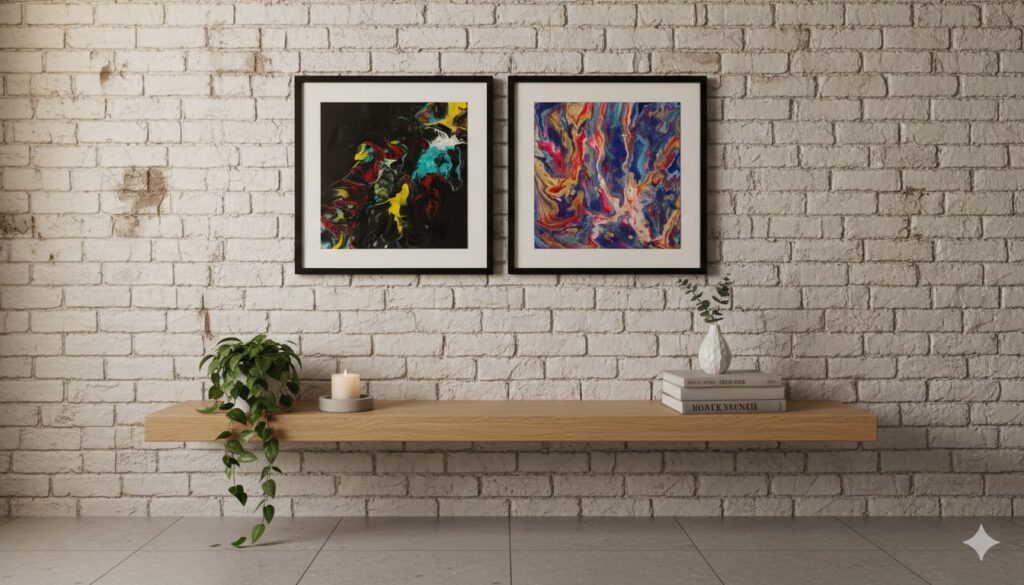
Regional Presence and Technique While it is a global phenomenon, fluid art is particularly prominent in modern urban art scenes across Europe, North America, and Australia. It is a staple in “maker” communities and therapeutic art workshops due to its meditative nature. The technique involves mixing acrylic paint with a pouring medium to achieve a specific viscosity. Variations like the “dirty pour,” “flip cup,” or “Dutch pour” (using a hair dryer) allow artists to influence the direction and blending of colors.
Modern Applications Today, fluid art is prized for its high-gloss, organic aesthetic:
- Contemporary Interior Design: Large-scale canvases serve as vibrant focal points that mimic natural stone or cosmic nebulae.
- Functional Decor: The technique is frequently applied to coasters, tabletops, and jewelry, often sealed with resin for a glass-like finish.
- Art Therapy: Because it relies on the physics of flow rather than traditional drawing skills, it is used extensively for stress relief and creative expression.
Start Your Artistic Journey Today with Artitude
Ready to explore your artistic side? Join our workshops and start creating beautiful art with us.